Monterrey Oak: Resilience, Wildlife Value, and Planting Guide

Introduction
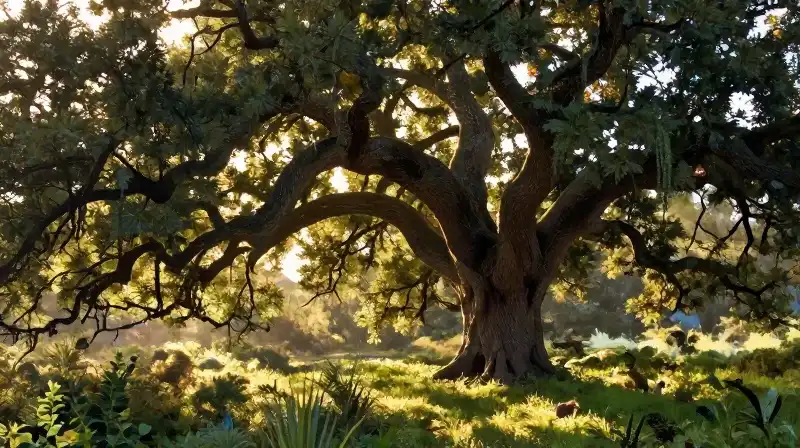
The Monterrey Oak (Quercus polymorpha) is defined by its exceptional resilience and significant ecological contributions, making it more than just a decorative tree; it is a vital landscape element. Originating in the rugged transition zone between northern Mexico and southern Texas, this semi-evergreen species has earned a strong reputation among land managers and gardeners for its ability to thrive in varied, often challenging environments. When seeking a low-maintenance, robust tree that offers year-round structural interest and a reliable food source for local fauna, the Monterrey Oak presents a compelling, highly adaptable choice.
Wildlife Value and Acorn Production
 The ecological significance of the Monterey Oak lies primarily in its production of abundant and sustained food resources. It is widely recognized as a superior host tree for supporting wildlife populations, particularly white-tailed deer and various other game species, due to its dependable growth and dense canopy.
A distinguishing feature is the late and abundant production of its acorns. Unlike species with seasonal output, the acorns of the Monterrey Oak are sweet and often available from late fall well into early winter. This extended availability provides a crucial survival resource for wildlife exactly when other plant forage has been depleted. The acorns are medium-sized, typically comparable in dimension to a quarter.
Because it maintains a dense, semi-evergreen canopy, the tree offers year-round shelter and cover for nesting birds and small mammals, ensuring it provides ongoing structural value to its surrounding environment.
Plant Selection Criteria and Suitability
Before committing to a Monterrey Oak tree for sale, it is useful to understand its specific requirements and inherent strengths. This species is categorized as highly hardy, but its performance depends heavily on local site conditions.
The Monterrey Oak thrives in USDA hardiness zones 7 through 10. Its robust nature allows it to withstand significant environmental stress, including considerable drought. For optimal growth, the tree requires full sun exposure and well-drained soils. While it is highly adaptable, preventing root rot is critical, so avoiding areas with water pooling is necessary.
Consider the Monterrey Oak beneficial if your landscape demands:
- Exceptional drought tolerance and resistance to common pests.
- A reliable, low-maintenance, long-term canopy and shelter.
- An “orchard” style landscape dedicated to supporting local biodiversity.
- A fast-growing tree that maintains a clean, upright, and uniform appearance.
Growth Characteristics and Mature Dimensions
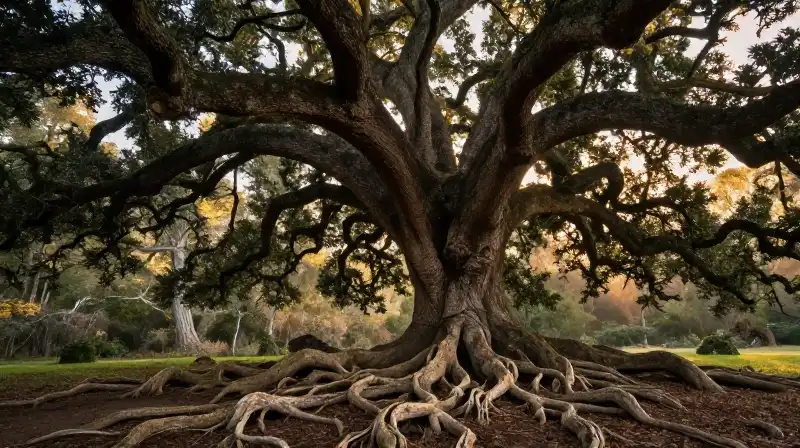 The Monterrey Oak exhibits a vigorous and rapid growth rate, which allows it to establish a strong, uniform rounded canopy efficiently. Its mature form is substantial and stately, providing excellent shade and structure to residential or commercial properties.
The tree typically reaches an approximate mature height of 45 feet and a width of 35 feet. It maintains a fast growth habit and an upright form. This structural integrity makes it a highly effective choice for both natural landscapes and more formal street plantings. The foliage is a handsome dark green, which often develops glossy tones throughout the summer months, adding consistent color and appeal to the garden throughout the year.
Addressing Common Oak Confusion: Monterrey vs. White Oak
>One common query is whether the Monterrey Oak is a white oak. While both are members of the *Quercus* genus, they are distinct species with unique characteristics. The Monterrey Oak is typically a more rounded, upright tree with a semi-evergreen nature and a specific robust structure tailored to arid/semi-arid environments of the American Southwest. White oaks, by comparison, are often more deciduous and possess different growth habits.
Do Monterrey Oaks Drop Acorns?
>Yes, Monterrey Oaks produce acorns. In addition to providing a vital food source for wildlife, the production of acorns is a standard biological function of the species. This production is highly dependable, extending into late autumn and even into the cooler months, which solidifies its role as a key wildlife resource.
Maintenance and Long-Term Care
 >As a low-maintenance tree, the Monterrey Oak requires minimal intervention once established. However, responsible care includes monitoring drainage and providing appropriate spacing.
Drought Tolerance and Soil: While highly drought-tolerant, young trees benefit from deep initial watering during establishment. Mature trees, however, are exceptionally adapted to drier conditions. The focus should remain on ensuring the soil is well-drained to prevent any issues with root health. Pest and Health: The species exhibits natural resistance to many common pests. Monitoring the foliage for signs of stress or disease, especially during periods of extreme heat, is the only routine maintenance required.
Strategic Planting Considerations
Placing the Monterrey Oak requires a thoughtful evaluation of your property’s exposure and intended function.
For maximum benefit, plant in locations that receive full sun to fuel its rapid growth and robust canopy development. Because of its mature size, it is crucial to allow adequate space around the trunk, especially if planting near structures or utility lines. The Monterrey Oak is versatile; it can be used as a primary structural shade tree, a prominent landscape accent, or as a keystone species in a functional wildlife garden. Its sturdy form and consistent performance make it a reliable long-term investment for any landscape aiming for both beauty and ecological function.
In summary, while the Monterrey Oak’s resilience and handsome form make it a powerful visual statement, its true value lies in its ability to provide sustained ecological benefits. By selecting a site with full sun and ensuring excellent drainage, you leverage the tree’s natural drought tolerance and robust health to establish a dependable habitat and a lasting piece of structural landscape art.
Frequently Asked Questions
Do Monterrey oaks drop acorns?
Yes, the Monterrey Oak produces acorns, which are an abundant and dependable feature of the species. This production is a standard biological function that provides a crucial food source for wildlife, often available from late fall through early winter.
Is a Monterrey oak a white oak?
The article states that while both are members of the Quercus genus, the Monterrey Oak and white oak are distinct species with unique characteristics. The Monterrey Oak is typically a more rounded, upright, semi-evergreen tree, whereas white oaks are often more deciduous with different growth habits.
How to Establish and Care for a Monterrey Oak
Select a Suitable Location
Choose a planting site that receives full sun and is located in a USDA hardiness zone 7 through 10.
Ensure Proper Spacing and Drainage
Allow adequate space around the trunk, especially near structures or utility lines, and ensure the soil is well-drained to prevent root rot.
Establish the Tree
For young trees, provide deep initial watering to help it establish itself before it is fully adapted to drier conditions.
Monitor Health and Stress
Routinely monitor the foliage for any signs of stress or disease, particularly during periods of extreme heat.
Related Articles