Growing the Arapaho Crape Myrtle: Size, Needs, and Fall Colors

Introduction
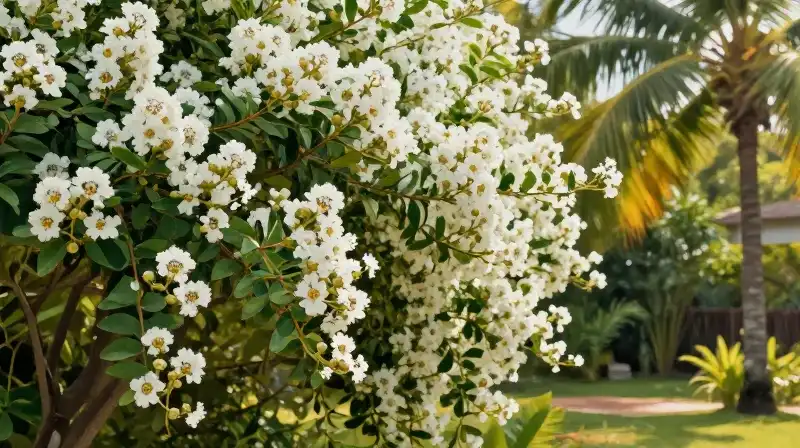
The Arapahoe Crape Myrtle (Lagerstroemia tomentosa) is highly prized in ornamental horticulture for its dramatic visual transitions and striking floral displays. Known for its captivating wine-red blooms with a subtle purple hue, this variety delivers a long season of color starting from early summer through the fall. While many crape myrtles are valued for their vibrant summer flowers, the Arapahoe is equally celebrated for the beautiful transformation of its foliage. With its creamy white exfoliating bark, dark green leaves, and spectacular fall colors, the Arapahoe crape myrtle offers a substantial, high-impact statement for landscaping that moves beyond typical summer gardening needs.
Understanding the specific size, care requirements, and environmental preferences of this tree ensures it will thrive and provide the aesthetic value expected by homeowners looking to enhance their curb appeal.
Size and Growth Profile of Arapahoe Crape Myrtle
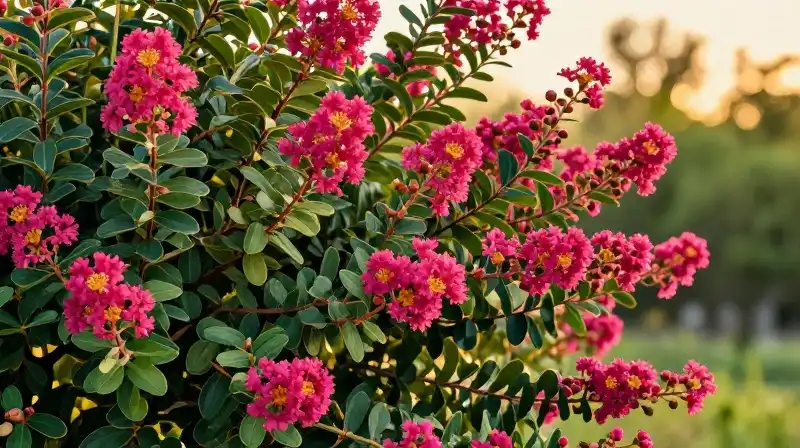
One of the most common questions when planning a landscape is the mature size of the planting. The Arapahoe Crape Myrtle reaches a moderate yet imposing stature, maturing typically to approximately 22 feet in height and spreading out to a width of 15 to 20 feet.
Hardiness and Growth Rate
This variety is well-suited for a wide range of climates, establishing itself successfully in USDA hardiness zones 6 through 10. It exhibits a slow-to-moderate growth rate, meaning it establishes itself steadily over several seasons. While this pace is forgiving for gardeners, it is important to allow enough space for the tree to reach its full dimensions without immediate crowding.
Environmental Needs: Sun, Water, and Soil
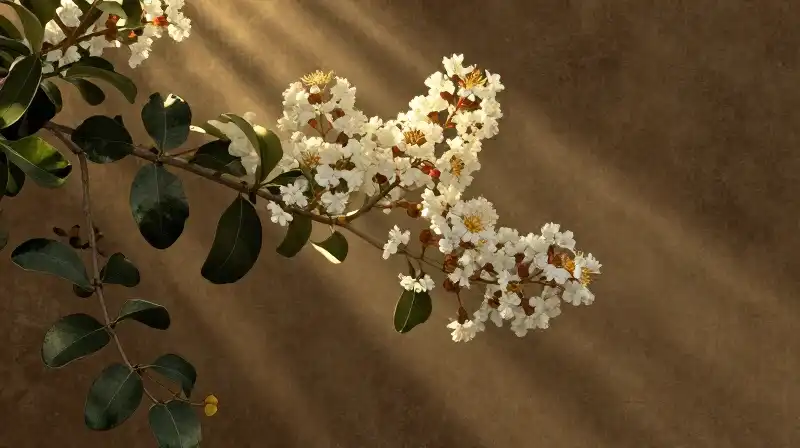
To maximize the production of bright blooms and maintain healthy foliage, the Arapahoe Crape Myrtle has specific environmental needs. Meeting these requirements dictates where in your yard the tree will perform best.
Sunlight Requirements
Full sunlight exposure is essential for the plant to achieve its best results. The Arapahoe Crape Myrtle requires at least six hours of direct sunlight daily to produce its most vigorous and vibrant flowers. Partial shade will result in sparser blooms and potentially weakened foliage.
Water and Soil Conditions
While this tree is quite adaptable regarding soil type, it does thrive in a variety of conditions. During its initial establishment phase, consistent watering is necessary to encourage a robust root system. Once mature, the Arapahoe Crape Myrtle is drought-resistant, making it suitable for xeriscapes or areas where supplemental irrigation is difficult. Its non-invasive root system poses no threat to nearby structures or existing plant life.
The Aesthetics: Color Transitions and Foliage
What truly sets the Arapahoe Crape Myrtle apart from other similar varieties is its rich, dual-tone coloration. The foliage transitions dramatically throughout the year, providing interest even outside of blooming seasons.
- Spring: The leaves begin the season in a vibrant red.
- Summer: They transition to a lush, dark green, providing a sharp contrast against the bright wine-red flowers.
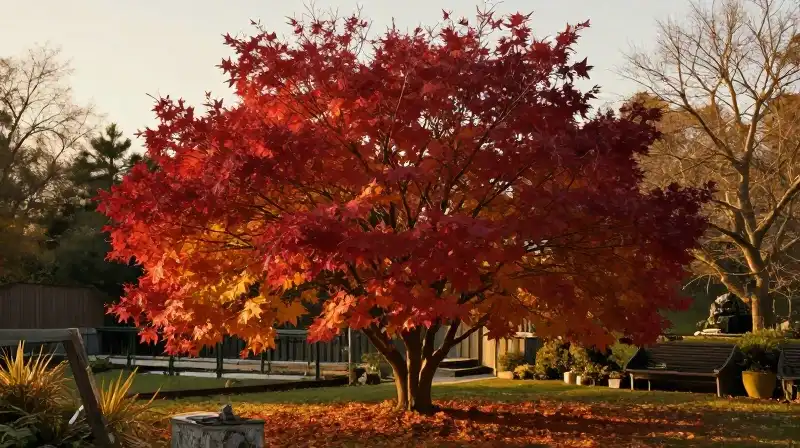
- Autumn: This is when the tree truly showcases its complexity. The dark green foliage gradually turns into a spectacular array of shades, including vibrant reds, cheerful yellows, brilliant oranges, and shimmering gold.
The contrast between the creamy white exfoliating bark and the rich green and seasonal red foliage enhances the tree’s stature, making it an excellent candidate for a landscape focal point or a specimen planting.
Practical Application and Landscaping Uses
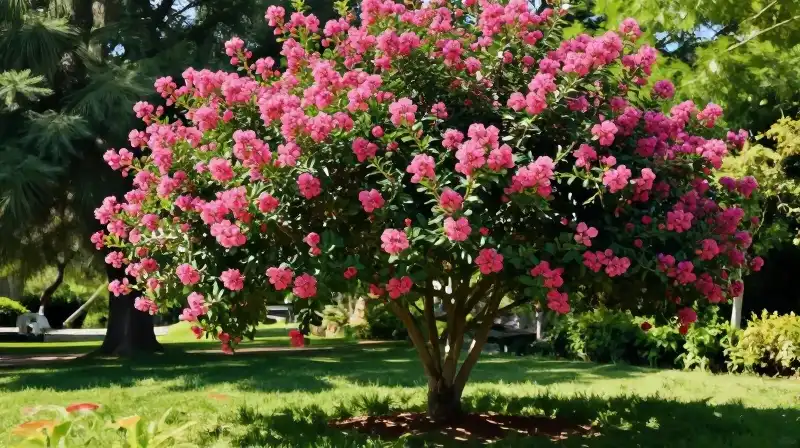
Because of its combination of visual impact, manageable size, and ability to thrive in various soil types, the Arapahoe Crape Myrtle is an exceptionally versatile landscape choice. Its growth habit makes it ideal for defined border planting or linear features.
How to Use Arapahoe Crape Myrtles in the Landscape
- Driveway Lining: Due to its upright growth habit and defined spread, it is perfect for lining a long driveway, providing continuous color and structure.
- Borders and Transitions: Use it to transition between different landscape zones, offering a dramatic visual punctuation point.
- Specimen Planting: As a standalone focal point, its unique bark and spectacular fall color make it a stunning centerpiece in a garden.
When choosing an Arapahoe Crape Myrtle for sale, consider the maturity of the plant; a young tree will take time to develop the desired 22-foot height, while a larger specimen offers immediate visual impact.
Choosing the Right Variety for Your Site
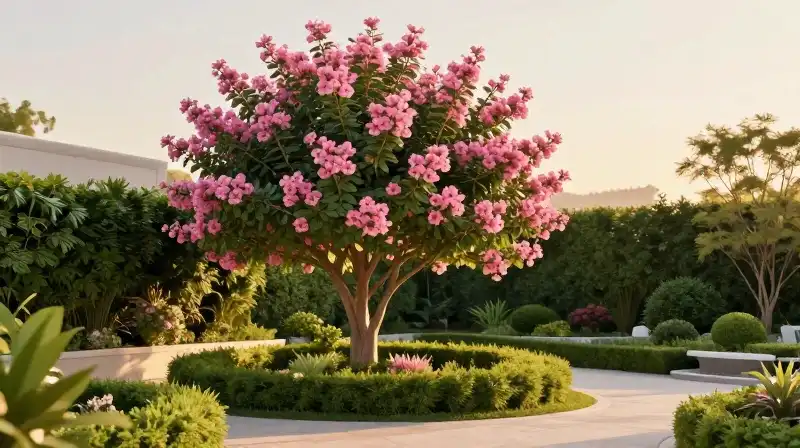
While the Arapahoe is a standout option, success depends on matching its specific needs to your local conditions. Before committing to the plant, evaluate the following criteria:
- Full Sun Availability: Confirm your location receives six or more hours of direct, uninterrupted sunlight.
- Space Limitations: Ensure you have adequate space for the 15–20 foot spread, particularly if planting near structures or walkways.
- Climatic Fit: Verify that your area falls within the USDA hardiness range of zones 6 through 10.
If you prioritize a specific flower color other than wine-red or are looking for a bushier form, it may be worth researching alternatives like Natchez Crape Myrtle, but for the dramatic fall color and specific wine-red hue described here, the Arapahoe is a powerful contender.
Frequently Asked Questions
How tall do Arapaho crape myrtles get?
The Arapahoe Crape Myrtle typically matures to approximately 22 feet in height. It also spreads out to a width of 15 to 20 feet.
Related Articles