How to Grow Red Tulips: Planting, Zones, and Seasonal Tips

Introduction
Red tulips are iconic spring-flowering bulbs, renowned for their vibrant, striking visual impact, often evoking the expansive landscapes of Dutch fields. For gardeners seeking to create a profound visual statement in their ornamental plantings, red tulips provide a robust and dramatic centerpiece. Successfully cultivating these blooms, however, requires careful attention to seasonal timing and environmental conditions. This guide details the precise methods for growing red tulips, moving beyond simple planting advice to address the specific temperature requirements, zoning limitations, and long-term care necessary to ensure a full, glorious spring display.
Choosing the Right Red Tulip Variety
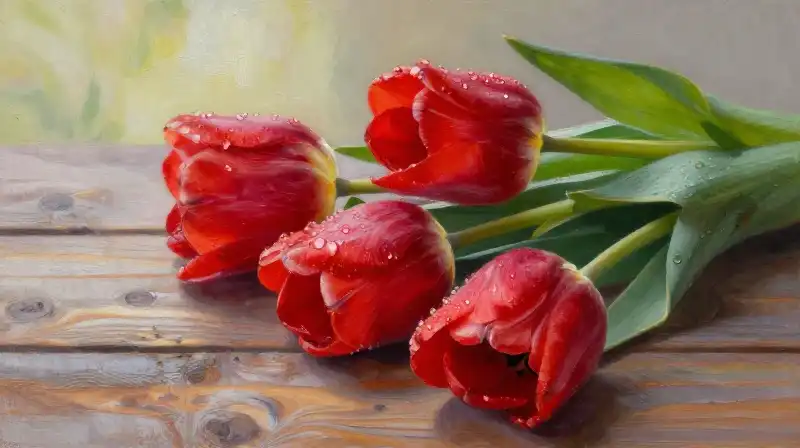
Not all red tulips grow or behave the same way. When planning a garden, selecting a variety that matches your specific needs for size, hardiness, and desired bloom time is essential. Depending on your space, you might opt for miniature reds to fit a small container or select a vigorous “statement” variety for large-scale mass planting.
Selection Criteria for Red Tulips
- Bloom Timing: Tulips are not a single-season event. Varieties range from very early to very late bloom, allowing you to stagger plantings for a sustained visual impact throughout the spring months.
- Bulb Size: Measure bulb circumference to predict flower abundance. Large bulbs provide massive floral displays suitable for high-impact areas, while smaller bulbs offer high density for compact beds.
- Hardiness and Pest Resistance: Some red tulip varieties possess high hardiness, allowing them to withstand variable spring weather and exhibiting resistance to common garden pests, including deer.
- Aesthetic Goal: If you are looking for a vibrant, singular color, consider classic, solid reds. For complexity, look for intricate patterns or deep, dark red shades.
Understanding Temperature: The Key to Bloom
Tulips are cold-loving plants. They require a prolonged period of sustained cold to properly initiate their growth and achieve robust flowering. This concept, known as chilling, is the most critical factor in successful tulip cultivation.
The Role of Prechilling
For bulbs planted in warmer USDA zones—specifically 7b and above (encompassing parts of the South, Southwest, and California)—“prechilling” is a necessary precursor to ensure the flowers form. Without this initial cold exposure before planting, the bulbs may struggle to bloom successfully later in the spring.
It is crucial to differentiate between air temperature and soil temperature. The soil often lags behind the air, meaning that while the air may be mild, the ground may still be freezing. The optimal planting windows must be scheduled around this ground freezing cycle to allow roots to develop properly before winter dormancy.
Seasonal Planting Strategy and USDA Zones
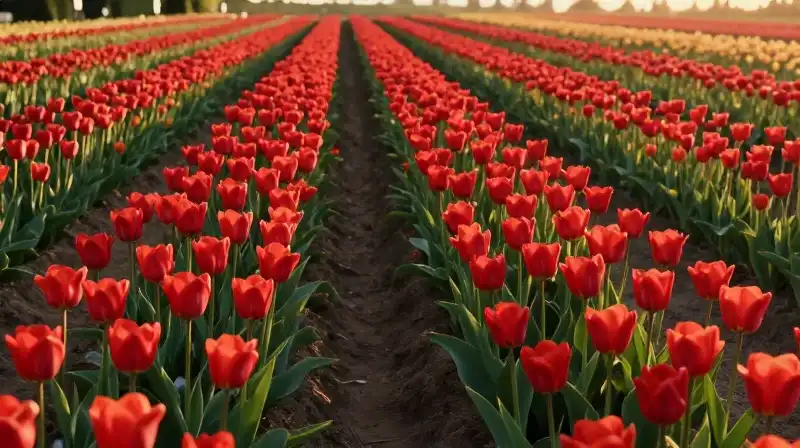
Timing is everything. To ensure a reliable display, the planting window for red tulips generally runs from September through December. This allows the bulbs to establish themselves during the cooler autumn months, where cold temperatures encourage root development.
Suitable Cultivation Ranges
The general planting range for red tulips spans diverse climate zones:
- Northern/Cool Climates: Zones 3a to 8b.
- West Coast: Zone 10b.
Regardless of your zone, planting must occur when the soil is cool. Planting too late, after the ground has consistently warmed, will accelerate growth in a way that often leads to early blooming and weakening of the overall plant.
Post-Planting Care and Maintenance
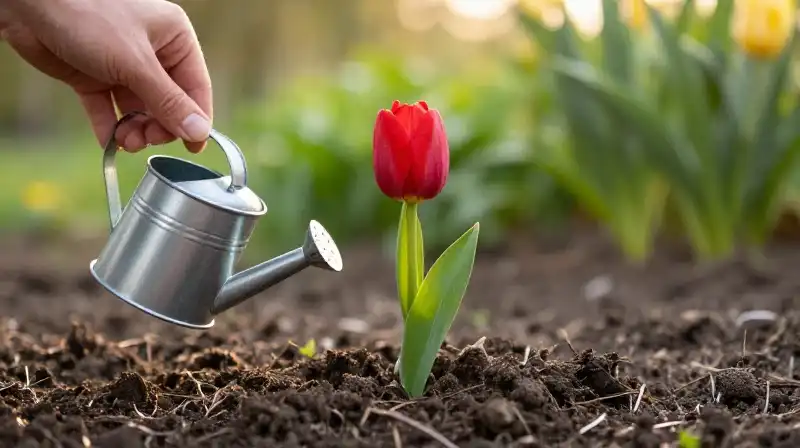
Once planted, proper maintenance supports the vigorous nature and radiant color of your red tulips. While tulips are generally low-maintenance once established, certain practices enhance their longevity and bloom quality.
- Staggering Plantings: To prevent a “one-and-done” flush of color, strategically stagger your plantings over the autumn months. This strategy ensures that your garden provides a continuous spectrum of red and complementary colors throughout the spring.
- Soil Composition: Ensure the soil is well-draining. Tulips do not thrive in waterlogged conditions, which can lead to root rot. Incorporate organic matter to improve texture and fertility.
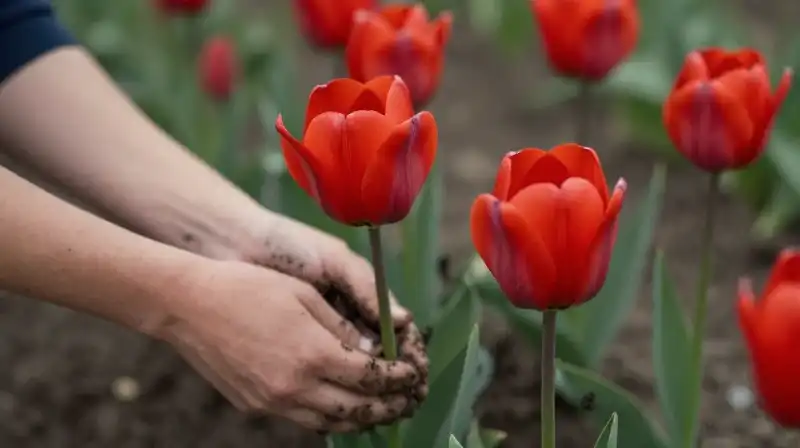
- Bulb Placement: Plant bulbs at the correct depth, with the pointed end facing up, ensuring that the emerging shoots have the necessary space to reach their full stature.
- Staking/Support: For tall or very dramatic red varieties, some structural support may be beneficial to prevent stems from breaking under the weight of their full bloom.
Maximizing Field Impact in Your Garden
If your goal is to achieve a “vast field” aesthetic in your local garden, the strategy shifts from individual flower focus to mass visual impact. By utilizing large quantities of uniform red tulips—whether classic, dark red, or miniature—you can create a powerful, cohesive scene.
Mixing different red hues (e.g., deep crimson with lighter scarlet) or combining red tulips with contrasting plants, such as blue or purple varieties, adds depth and visual interest, enhancing the overall design beyond a monochromatic field display.
Critical Errors to Avoid
Understanding the common pitfalls helps prevent expensive gardening mistakes. Here are the most frequent issues encountered when growing red tulips:
| Error | Consequence | Solution |
|---|---|---|
| Planting too late | Failure to bloom or weak, premature flowers. | Strictly adhere to the September to December planting window. |
| Insufficient Chilling | Lack of bulb vitality and stunted growth. | If in a warm zone, confirm prechilling methods were used. |
| Over-watering/Poor Drainage | Root rot and bulb collapse. | Ensure soil is amendable and well-draining before planting. |
Synthesis and Practical Planning
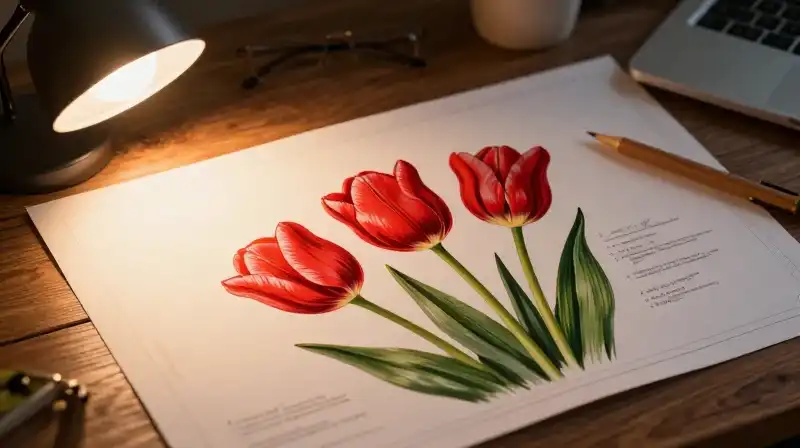
Growing striking red tulips requires precision and patience, but the payoff is a spectacular display. The core of success lies in respecting the bulb’s biological need for a proper cold cycle, particularly regarding planting timing in the fall. Treat the timing as a non-negotiable factor in your garden schedule. Always evaluate your climate—not just the air temperature, but the soil temperature—and choose red varieties that suit your size limitations and desired bloom duration. By prioritizing fall planting and managing drainage, you set the stage for a robust, high-impact spring garden.
Explore more: Dia de los Muertos Skull Designs: Symbols and Artistic Inspi
How to Grow Red Tulips
Select Red Tulip Variety
Choose a variety based on your aesthetic goal, required size, desired bloom time (staggered), and local hardiness.
Ensure Prechilling (for warm zones)
If you are in a warm USDA zone (7b and above), ensure the bulbs receive a period of sustained cold before planting to initiate proper growth.
Prepare Planting Medium
Ensure the soil is well-draining and incorporate organic matter to improve texture and fertility, avoiding waterlogged conditions.
Plant the Bulbs
Plant the bulbs between September and December when the soil is cool. Place them at the correct depth with the pointed end facing up, ensuring space for emerging shoots.
Provide Support (optional)
For tall or dramatic red varieties, consider using staking or structural support to prevent stems from breaking under the weight of the full bloom.
Related Articles