Garden Sand vs Play Sand: Which One Is Best for Your Garden?

Introduction
The decision to use sand in your garden often hinges on a common point of confusion: the difference between garden sand and play sand. While they share a similar granular appearance, their intended compositions, particle sizes, and ultimately, their functional uses are dramatically different. Simply put, neither sand is universally “the best”; the optimal choice depends entirely on the specific project—whether you are building a permeable path, improving soil structure, or simply contained play space. Choosing the wrong type can compromise drainage, aesthetics, or the health of your plants.
Defining the Two Types of Sand
 Understanding the fundamental nature of each product is the first step toward making the right selection. Although both terms are used loosely in the consumer market, gardening experts categorize them by intended use and physical properties.
Garden Sand
Garden sand, or horticultural sand, is specifically processed and graded for landscaping and agriculture. It is typically non-reactive, chemically inert, and designed to improve soil conditions. It is often classified further by texture, such as fine sand for mixing into potting mediums or coarse sand (sometimes referred to as sharp sand or 2ns sand) for drainage projects. Its primary purpose is functional—enhancing the environment for plants and structures.
Play Sand
Play sand, conversely, is manufactured for recreation. Its primary characteristics are uniformity and containment. It is usually cleaner and more consistent in texture than general garden sand, making it ideal for filling sandbox frames, managing runoff in children’s play areas, or simply providing a consistent, manageable surface. While it can be used in some landscaping, it lacks the specific chemical inertness or granular texture required for optimal soil amendment.
Garden Sand Applications and Composition
Garden sand is a highly versatile material whose effectiveness is dictated by its specific grade.
Improving Drainage and Aeration
The most critical use of garden sand is in managing moisture. By introducing coarse sand into heavy clay soil, you create pore spaces that allow excess water to drain quickly, preventing root rot. This improves soil aeration, which is vital for most plant life. When searching for the “best garden sand” for drainage, look for high-quality, clean, gritty material.
Pathway and Hardscaping Structure
In pathways and driveways, coarse garden sand (sometimes called crushed stone sand) is used as a bedding layer. It provides a stable, permeable base that allows for water infiltration while offering a firm surface for walking.
Soil Amendments and Porosity
Fine horticultural sand is often mixed into potting soil. It doesn’t replace organic matter, but it improves the soil’s texture, preventing it from compacting and ensuring that water moves through the planting medium rather than pooling around the roots.
Play Sand Use Cases and Constraints
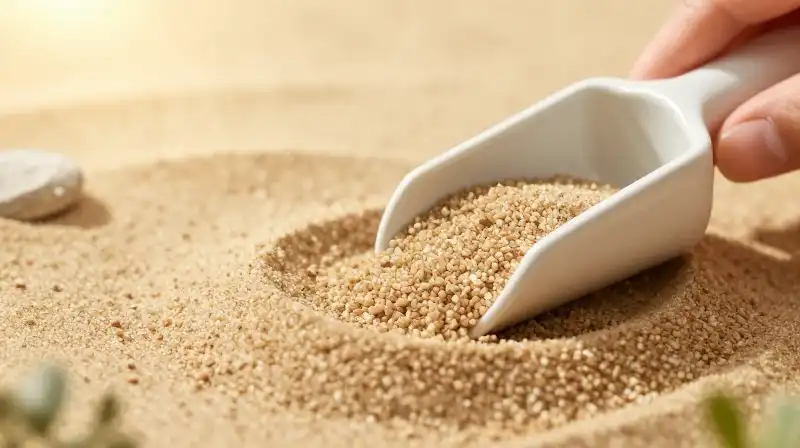 Play sand serves a different market need, focusing on safety, containment, and surface uniformity rather than complex soil chemistry.
Recreational Containment\h3> Its main function is aesthetic and protective. It is the standard material for filling sandbox structures, where the consistent grain size minimizes shifting and maximizes usability.
Drainage in Recreational Areas\h3> In large play areas or permeable landscaping, play sand can be used to create controlled runoff zones. However, because its composition is standardized for play, it may not offer the same specific structural or chemical benefits as specialized coarse garden sand.
Is Putting Sand in Your Garden a Good Idea?\h2> Putting sand in your garden is not inherently good or bad; it is a targeted tool. The decision depends entirely on the goal and the existing soil conditions.
When Sand is a Good Idea
It is highly beneficial when:
- You have heavy, compact clay soil that struggles with drainage.
- You are building a pathway or permeable surface.
- You need a specific texture in a container or raised bed mix.
When Sand Can Be Counterproductive
Sand should generally be avoided when:
- You are attempting to primarily improve nutrient retention, as sand is inert and does not retain nutrients.
- Your soil is already well-drained and loose.
- You require highly organic, loamy soil for nutrient-intensive vegetable gardening, as sand displaces essential organic matter.
Garden Sand vs. Play Sand: A Direct Comparison
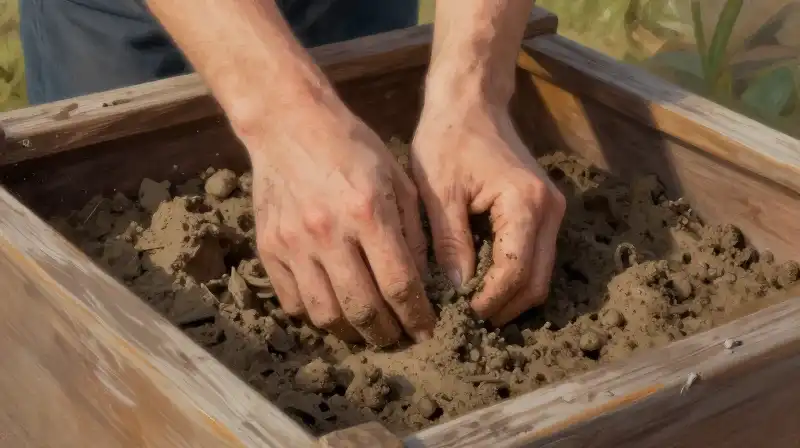 To clarify the differences, consider this practical comparison:
| Feature | Garden Sand (Horticultural) | Play Sand |
|---|---|---|
| Primary Function | Improve soil structure, drainage, and hardscaping. | Containment, aesthetics, and recreation. |
| Typical Grading | Varied (Fine, Coarse/Sharp, etc.) | Highly Uniform and consistent. |
| Composition Focus | Non-reactive, often specific grit size for porosity. | Cleanliness and consistent grain size for usability. |
| Ideal Use Case | Pathways, soil amendment, root zone aeration. | Sandboxes, playground surfaces, containment. |
Practical Decision Criteria for Buying Sand\h2> To ensure you select the correct material, look beyond the labels and consider the following factors:
1. Determine Your Goal\h3> Are you trying to fix a structural issue (drainage)? Choose **coarse garden sand** or sharp sand (sometimes called 2ns sand). Are you trying to create a soft, uniform surface for play? Choose **play sand**. Are you amending planting mix? Choose **fine horticultural sand**.
2. Assess Your Site\h3> If you are dealing with heavy clay, you need a mineral sand with high permeability. Generic play sand may not provide the necessary pore structure. Always prioritize sand labeled for horticultural or structural use for garden improvements.
3. Check Particle Consistency\h3> If the sand appears overly uniform, it is likely play sand. If it shows a range of slightly irregular, naturally weathered grains, it is more likely a functional garden sand intended for landscape use.
Choosing the Right Sand: A Final Synthesis of Use\h2> The critical takeaway is that garden sand and play sand serve distinct purposes. Do not use standard play sand in a garden project expecting drainage or soil improvement, as its consistent, uniform nature is optimized for containment, not porous structure. Conversely, while garden sand is superior for soil and pathways, its fine or coarse grades will not perform the function of a predictable, contained play surface. Always match the granular properties of the sand to the functional outcome you seek for your specific gardening or landscaping task.
Frequently Asked Questions
Is putting sand in your garden a good idea?
Putting sand in your garden is a targeted tool that is not inherently good or bad, as the decision depends entirely on the goal and the existing soil conditions. It is highly beneficial for improving drainage in heavy clay soil or building permeable pathways, but it should be avoided if you are attempting to improve nutrient retention.
Is there a difference between play sand and garden sand?
Yes, garden sand and play sand are different because they have distinct intended uses. Garden sand is processed for horticulture to improve soil structure and drainage, whereas play sand is manufactured for recreation, prioritizing uniformity and containment.
How to Choose the Right Sand for Your Garden
A guide to help you differentiate between garden sand and play sand based on your project requirements.
Determine your ultimate goal
Identify if you are addressing a structural issue (like poor drainage), creating a soft surface for play, or amending a planting mix.
Assess your site conditions
Evaluate if you are dealing with heavy, compact clay soil requiring high permeability, or if you need a specific texture for a raised bed.
Check particle consistency
Observe the grains: if the sand appears overly uniform, it is likely play sand; if it shows a range of slightly irregular, weathered grains, it is more likely a functional garden sand.
Related Articles