Fothergilla Mount Airy: Fragrant Blooms and Striking Fall Color

Introduction
Fothergilla ‘Mount Airy’ is a highly valued deciduous shrub renowned for providing intense, multi-season visual interest. Discovered by Michael A. Dirr at the Mt. Airy Arboretum, this cultivar is prized not merely for its profuse spring display but for its remarkable autumn foliage. Known for its compact, reliable habit and striking transitions, ‘Mount Airy’ functions effectively as a powerful specimen or a foundational border shrub. If you are seeking a vigorous, low-maintenance plant that delivers scent in spring and vibrant color in fall, this shrub offers a compelling solution.
Defining the Cultivar: Characteristics of Fothergilla ‘Mount Airy’
Fothergilla ‘Mount Airy’ is a hardy, upright deciduous shrub that maintains a consistently structured form. Its primary appeal lies in the contrast between its leathery, structured foliage and its ornamental seasonal performance. It is typically a multi-stemmed plant, growing into a compact, rounded shape.
Size and Habit
The shrub exhibits a controlled, moderate growth rate, making it suitable for various landscape scales. Its mature size generally ranges between 3 to 6 feet, though some reports cite heights up to 4 or 5 feet. Its upright growth habit allows it to be used efficiently in smaller or more constrained planting beds without becoming overly sprawling.
Foliage Profile
The leaves of ‘Mount Airy’ are leathery and typically ovate to obovate, measuring between 2 and 4 inches in length. The color contrast of the foliage is a key feature: the upper surface presents a deep, dark green, while the undersides display a noticeable bluish-gray tone. This robust foliage provides excellent texture and color throughout the summer months.
Seasonal Appeal: From Fragrance to Fire
The beauty of this cultivar is its ability to offer distinct, high-impact interest across different times of the year. The seasonal highlights follow a predictable pattern:
Spring Bloom and Fragrance
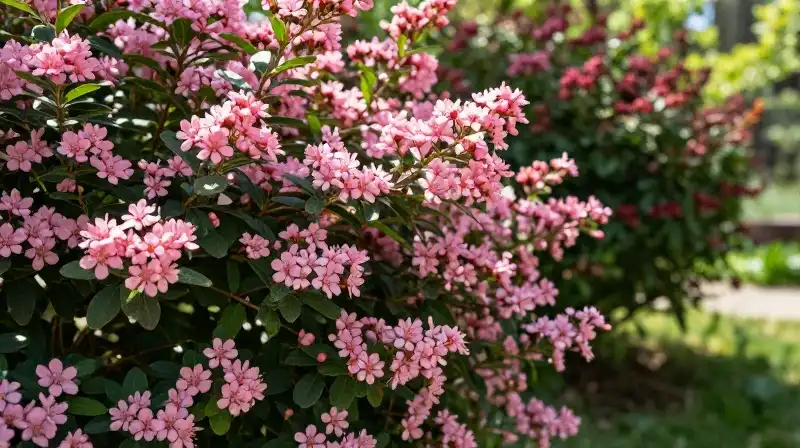
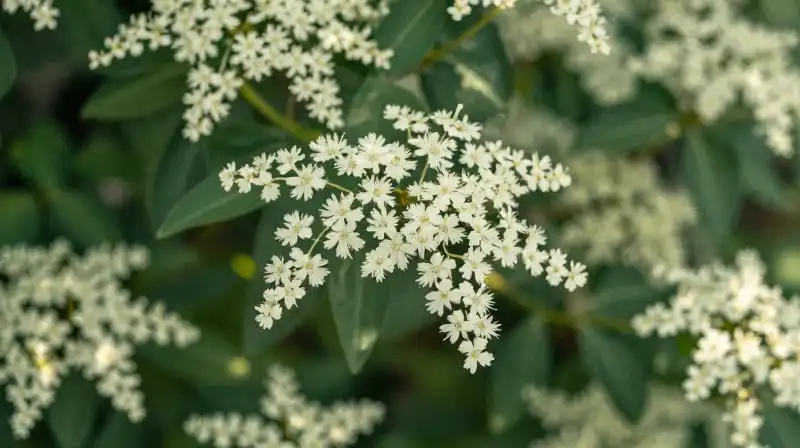
The peak of the shrub’s spring display occurs from April to May. ‘Mount Airy’ is characterized by copious, white, bottlebrush-like flower spikes emerging from terminal points on the branches. These flowers are small and apetalous, but they are famous for their distinct, honey-scented fragrance, providing a sensory element that many other shrubs lack.
Summer Structure and Foliage
During the warmer months, the focus shifts to the density and health of the dark green, leathery leaves. ‘Mount Airy’ provides reliable, attractive structure and deep color, making it an ideal backdrop for other colorful garden elements. The shrub is also noted for being resistant to browsing by deer, offering a practical benefit in heavily populated garden areas.
Autumn Transformation
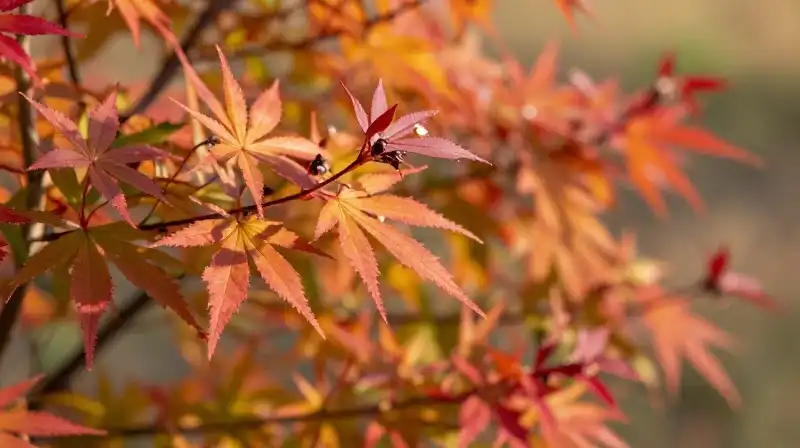
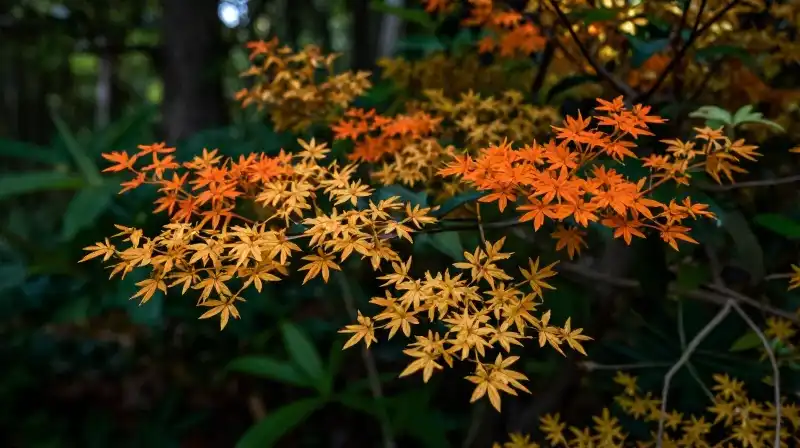
The shrub’s most dramatic visual event occurs in the fall. The foliage undergoes a vibrant transformation, displaying rich shades of yellow, orange, red, and red-purple before dropping. This spectacular display of fall color is often the primary reason this Fothergilla cultivar is selected for landscape design.
Growing Fothergilla ‘Mount Airy’: Care and Environment
To ensure optimal performance, understanding the shrub’s environmental requirements is essential. This cultivar is generally robust and relatively easy to maintain, but specific care is necessary for best results.
Soil and Hydration Requirements
‘Mount Airy’ thrives in acidic soils that are rich in organic matter. Consistent moisture is necessary, but it must be paired with excellent drainage to prevent root rot. Because the shrub is vigorous, while it is generally forgiving, proper soil conditions will maximize both its growth and flowering potential.
Sun Exposure and Light
While the plant performs best when situated in full sun, Fothergilla ‘Mount Airy’ is capable of tolerating partial shade. However, prioritizing a location with ample direct sunlight will encourage the most vigorous growth and profuse flowering.
Maintenance and Management
As a low-maintenance plant, pruning needs are minimal, focusing mostly on maintaining its desired compact shape. It is important to note that this shrub has a natural tendency to spread via suckers. While this spreading habit can be controlled through occasional removal, landscape planning should account for its ability to fill a given space.
Practical Plant Selection and Usage
The versatility and striking characteristics of Fothergilla ‘Mount Airy’ allow for several effective planting scenarios.
Ideal Planting Scenarios
Due to its compact size and ability to maintain an upright form, ‘Mount Airy’ excels in several applications:
- Specimen Plant: Allowing its entire seasonal cycle to be admired as a focal point.
- Low Hedge: Its dense, compact nature makes it excellent for informal boundary definition.
- Sensory Garden: Its highly fragrant spring flowers make it a prime candidate for sensory plantings.
- Border Shrub: It provides year-round structure and visual contrast to more delicate annual or perennial plantings.
Companion Planting and Synergy
When planning mixed borders, Fothergilla ‘Mount Airy’ integrates exceptionally well with other acid-loving plants. Pairing it with species such as rhododendrons, blueberries, and other acid-tolerant shrubs creates a harmonious garden ecosystem, benefiting both plants through shared soil conditions.
Choosing the Right ‘Mount Airy’: Key Considerations
When deciding whether to incorporate Fothergilla ‘Mount Airy’ into your landscape, consider the following practical factors. Its reliability is high, but a few limitations should be known.
Addressing Growth Rate and Spread
Because ‘Mount Airy’ can spread via suckers, it is not a truly non-spreading specimen. If you are planting in an area where unmanaged spread is a major concern, you must commit to periodic removal. Otherwise, allow it the space to establish its natural, vigorous growth pattern.
Environmental Suitability Checklist
Before purchasing, confirm the following conditions are met at your intended planting site. These criteria dictate how successfully the shrub will function as a multi-season plant:
- Adequate exposure to full or partial sun.
- Availability of well-draining, organically rich acidic soil.
- A tolerance for acidic soil pH (5.5–6.5).
- Space to allow for its mature, compact size of 3–6 feet.
Fothergilla ‘Mount Airy’ is a highly dependable, low-maintenance shrub that offers disproportionate seasonal rewards. Its ability to provide a burst of honey-scented white fragrance in the spring, solid dark structure through the summer, and a show-stopping cascade of yellow, orange, and red-purple in the autumn makes it an outstanding choice for those seeking dynamic, reliable landscape interest.
How to Grow Fothergilla 'Mount Airy'
Assess Sun Exposure
Prioritize a location with adequate full sun or at least partial shade to encourage vigorous growth and profuse flowering.
Verify Soil Conditions
Ensure the site has well-draining, organically rich acidic soil (ideally with a pH between 5.5 and 6.5) to support the shrub's health.
Evaluate Space Requirements
Select a space large enough to accommodate the shrub's mature, compact size, which typically ranges from 3 to 6 feet.
Plan for Maintenance
Be prepared to manage the shrub's natural tendency to spread via suckers by performing occasional removal if containment is desired.
Related Articles