
Insulated Greenhouse: Maximizing Heat Retention and Cutting Costs

Introduction
The primary challenge in greenhouse operation during colder months is heat loss. Effective insulation is not simply about warmth; it is a critical economic function that prevents dramatic utility costs while maintaining a stable, optimal environment for sensitive crops. Choosing an insulated greenhouse requires understanding how various materials and structural designs work together to minimize thermal transfer. This article outlines the essential engineering principles and component choices necessary to maximize heat retention, ensuring consistent production and maximum profitability throughout the growing season.
Evaluating Primary Cladding Materials for R-Value
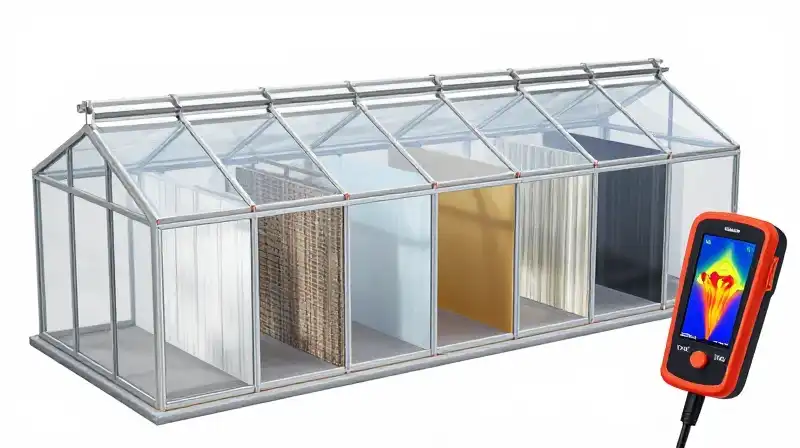
The cladding—the outer covering of the greenhouse—is the most crucial component in determining its insulation efficacy. Different materials offer varying degrees of thermal resistance (R-value), light diffusion, and structural benefits.
When selecting cladding, the trade-offs between cost, light transmission, and heat retention are paramount:
| Material | Insulation Mechanism | Pros | Cons |
|---|---|---|---|
| Gas-Filled Insulated Glass | Trapped gas layers within double panes (e.g., 22mm) | Exceptional thermal retention; high aesthetic quality. | Higher initial cost; potential for thermal stress if not properly engineered. |
| Twin-Wall Polycarbonate | Air trapped between parallel walls | High insulation, excellent light diffusion, UV protection, and lightweight. | Can be susceptible to scratching; moderate cost. |
| Double Poly Film | Trapped air between two layers | High R-value achieved at a lower cost; flexible and affordable. | Less rigid than glass or polycarbonate; requires specialized application. |
Strategic Use of Supplementary Internal Insulation
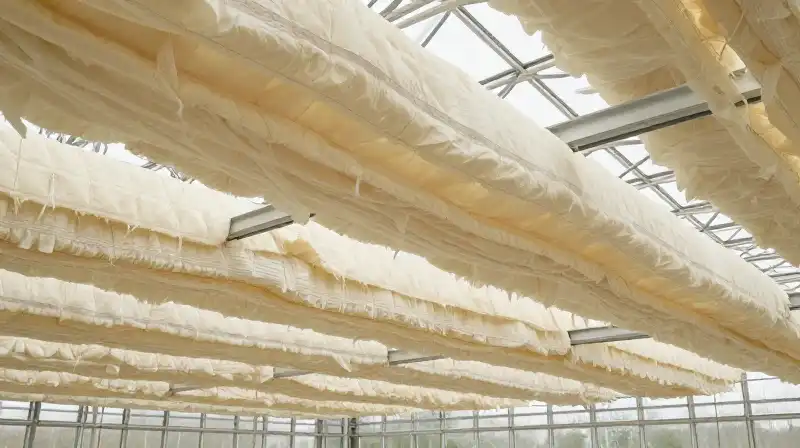
Even with superior external cladding, localized heat loss can occur. Supplemental internal insulation acts as a vital safety net, boosting the overall cold tolerance of the structure. This strategy involves layering materials to block radiant heat transfer within the greenhouse itself.
Several methods are employed to address specific heat transfer issues:
- Thermal Insulation Foil: Used to reduce radiant heat loss across open spaces, effectively trapping warm air internally.
- Horticultural Bubble Wrap: Applied internally, this material increases heat retention without negatively affecting the light transmission required for photosynthesis.
- Reflective Insulation: Specifically useful on the northern side, which is most prone to substantial heat loss, this material helps reflect interior heat back into the structure.
Maintaining Structural Integrity Through Thermal Barriers
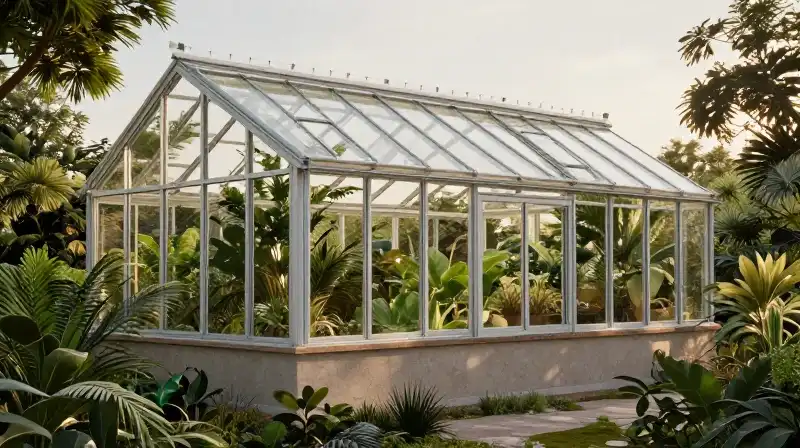
Insulation must extend beyond the glass to the structural framework to be effective. A high-performing greenhouse is defined by the elimination of thermal bridges—points where heat can easily escape through solid supports.
Key structural design elements that provide critical thermal barriers include:
- Thermal-Insulated Aluminum Profiles: The choice of frame material is critical. Using profiles designed as cold barriers ensures that the structural components do not allow heat to conduct out of the growing environment.
- Gas-Filled Insulated Panels: The use of 22mm thick, gas-filled double-pane glass is a specific technical detail that ensures exceptional thermal retention, far surpassing standard single-pane glass.
- Automated Thermal Barriers: Heat retention curtains function as an automated, dynamic barrier, preventing heat loss through the upper portions of the greenhouse whenever temperatures begin to drop.
Maximizing Operational Efficiency and Control
While insulation deals with static heat retention, operational controls manage heat exchange and airflow. Efficient greenhouse design integrates robust access points and ventilation without compromising the thermal envelope.
A well-designed system balances the need for warmth with the necessity of air circulation and maintenance. This includes:
- Access Points: Utilizing double sliding doors on both side and gable ends provides ample, weather-sealed access.
- Controlled Ventilation: The inclusion of four roof windows equipped with heavy-duty, automatic solar openers, alongside two manual pop-out side wall windows, allows operators to finely tune airflow and climate control.
Summary of Performance and Investment Criteria
Maximizing profitability in a winter growing season hinges on meticulous planning and the selection of components with high R-values. Choosing an insulated greenhouse is an investment in energy efficiency and yield stability.
Before making a purchase, consider the following practical criteria:
- Total System R-Value: Look beyond the cladding. The effectiveness of the entire structure (cladding + profiles + supplemental layers) dictates the energy savings.
- Design Specificity: Ensure the design addresses directional heat loss (e.g., reflective siding on the north face).
- Longevity and Maintenance: Verify the durability, such as the 15-year frame warranty and 10-year covering warranty, to protect the initial investment.
The optimal solution is one that utilizes the synergistic effects of gas-filled panels, thermal aluminum profiles, and strategic supplemental insulation, creating a high-performance environment regardless of external temperatures.
How to Choose and Design an Insulated Greenhouse
Evaluate Primary Cladding Materials
Select the outer covering (cladding) by evaluating various materials like gas-filled glass, twin-wall polycarbonate, or double poly film based on their thermal resistance (R-value), light diffusion, and cost.
Apply Supplementary Internal Insulation
Implement internal insulation strategies, such as using thermal foil, horticultural bubble wrap, or reflective insulation on the northern side, to trap radiant heat and boost overall cold tolerance.
Maintain Structural Thermal Barriers
Ensure the structural framework is designed to eliminate thermal bridges by utilizing high-performing materials like thermal-insulated aluminum profiles and gas-filled insulated panels.
Integrate Operational Control Systems
Design the system to include efficient access points, such as double sliding doors, and controlled ventilation features, such as automatic solar roof openers.
Assess Final System Criteria
Before purchase, verify the Total System R-Value, the design's specificity to directional heat loss, and the longevity and warranty terms of the entire assembly.
Related Articles