Shade Sail Ideas: Expert Design Principles for Strength and Style

Introduction
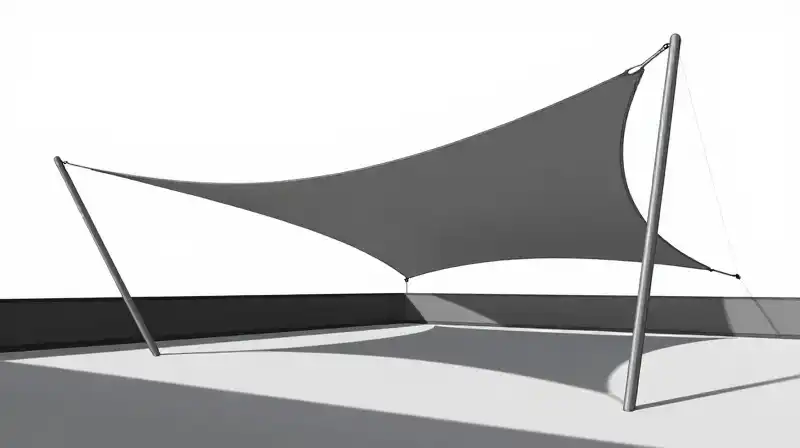
Shade sail ideas go far beyond simple sun blockage; they represent a specific application of tensile architecture designed to balance strength, aesthetics, and environmental protection. Successful residential design starts not with choosing a pretty layout, but with understanding the physics of tension. A shade sail’s structural integrity is entirely dependent on how it is tensioned and the geometry of its setup. This guide outlines the critical design principles—from required geometry to fabric performance and regulatory limits—to ensure your shade sail is not just a visual feature, but a long-term, durable, and highly effective piece of architectural engineering.
The Core Principles of Tensile Design and Strength
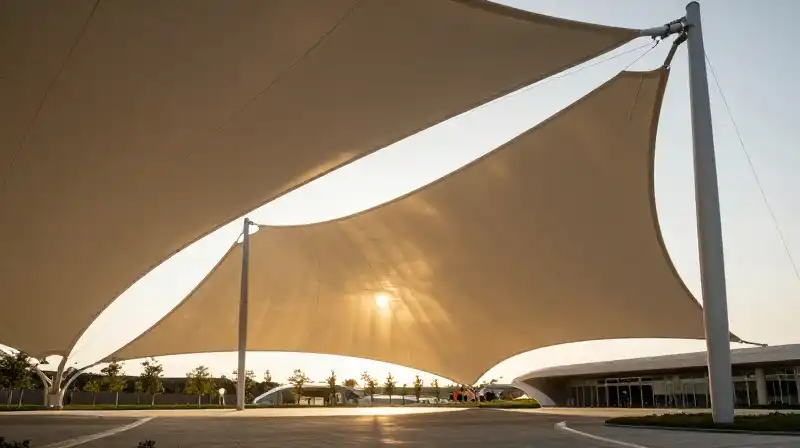 For a shade sail to maintain its shape and function under tension, it must adhere to specific geometric and structural rules that prevent sagging, flapping, or catastrophic failure.
Why Geometry Matters: The Hypar Principle
> The most structurally efficient design concept for shade sails is the ‘Hypar’ (or hyperbolic paraboloid) shape. This creates a distinct saddle-like curvature. By utilizing alternate high and low fixing points, the fabric is forced into a twist that naturally increases the strength of the structure. The Hypar design is inherently stable because the tension forces are distributed through the opposing curves. This prevents common issues seen in poorly designed sails, such as localized fabric stress or wind-induced flapping.
The Four-Side Minimum Rule
> A critical design requirement is the use of a minimum of four sides. Triangles (three-sided designs) inherently offer significantly less overall shade coverage and suffer from reduced structural stability because they cannot distribute the tension as effectively as a quadrilateral or a larger polygon. Choosing a design with four or more attachment points is foundational for effective sun blocking and robust performance.
Designing for the Sun Path: Seasonal Strategy and Footprint
> To maximize the utility and shade coverage of your sail, the design must account for the movement of the sun throughout the year. A static design that only considers a specific time of day is inefficient; a strategic design considers the entire solar arc.
Seasonal Expansion and Optimal Placement
> To capture maximum solar radiation, particularly during winter when the sun is lower, the sail’s footprint should be strategically increased, especially on the east and north-eastern sides. This planning ensures that critical living areas maintain consistent shade even during low-angle sun exposure.
Retractable Solutions for Flexibility
> For maximum versatility, retractable shade sails are a sophisticated option. They allow users to actively control the shade level based on the time of day or seasonal needs. This allows owners to maximize solar heat capture when needed during colder months while providing immediate, dense shade during peak summer hours.
Material Selection: Understanding Performance and Durability
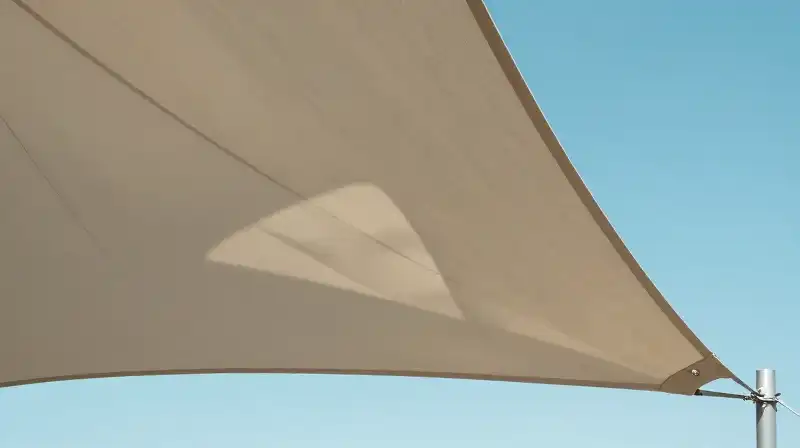 > The performance of your sail hinges on the fabric choice. Not all materials are created equal when dealing with UV radiation, waterproofing, and high-stress conditions.
High-Performance Residential Fabrics
> For standard residential applications, the primary choices offer different levels of protection and maintenance:
- **PVC (Polyvinyl Chloride):** This is the premium option, offering 100% UV resistance and complete waterproofing. While more rigid, it ensures absolute longevity and resistance to mold or mildew. >- **Specialized Polyester Mesh:** This choice balances shade density with allowing some air circulation. It is ideal for areas where wind resistance and airflow are priorities, though its UV resistance must be verified against the specific manufacturing grade. >
Commercial Grade Monofilament Options
> For large-scale commercial applications or environments prone to extreme weather and high winds, monofilament fabrics (such as Monotec) are utilized. These materials are engineered for superior tear strength and wind-load handling in demanding environments.
Customization, Tension, and Professional Installation
> Shade sails are never “one size fits all.” Because the fabric stretches significantly under tension, custom fabrication is strongly recommended over standard, off-the-shelf sizes.
The Necessity of Bespoke Design
> Standard sizes often result in uneven tension across the entire fabric. A custom 3D design and precise manufacture ensure that the sail achieves uniform tension from edge to edge. Uniform tension is the single most important factor in preventing premature sagging and guaranteeing structural integrity.
The Role of Professional Engineering
> Due to the high loads and complex dynamics of tensile structures, professional engineering is essential. Engineers calculate the required tensile loads to avoid both structural weakness and over-stress on the support posts. This expertise ensures the structure remains robust and free from dangerous failures.
Navigating the Legal and Practical Limits
 > Before installing your shade sail, you must be aware of local regulations, which often dictate installation parameters based on size and height.
Council Approval Requirements
> Many local councils have regulations governing the installation of temporary and semi-permanent outdoor structures. These requirements typically apply to installations that exceed specific thresholds, generally defined by: > >
>- Surface area (e.g., exceeding 20 square meters). > >- Height above ground (e.g., exceeding 3 meters). > >- Specific requirements for setback from property lines. >
It is mandatory to check local municipal codes before beginning any installation to avoid fines or the mandated removal of the structure.
Summary: Final Decision Criteria for Your Sail
> Selecting the perfect shade sail involves synthesizing architectural theory with practical environmental planning. To move from general ideas to a functional, high-performing structure, focus on these critical criteria:
>1. **Geometry First:** Prioritize a four-sided or larger design utilizing the Hypar principle for inherent strength. >2. **Custom Fit:** Opt for a custom fabrication to ensure even tension and prevent fabric deformation. >3. **Material for Environment:** Select PVC for absolute weatherproofing or specialized mesh for maximum airflow, matching the specific conditions of your location. >4. **Regulatory Compliance:** Verify local council requirements before proceeding with fabrication or installation. >5. **Sun Path Analysis:** Design the footprint to accommodate seasonal sun movement, using retractable options if dynamic control is required.
How to Design and Install a High-Performance Shade Sail
Determine Structural Geometry
Prioritize a design with four sides or more, utilizing the Hypar (hyperbolic paraboloid) principle for inherent strength and optimal tension distribution.
Plan for Seasonal Sun Path
Design the sail footprint to account for the movement of the sun throughout the year, potentially using retractable options for dynamic control.
Select Appropriate Material
Choose a material based on environmental conditions, such as PVC for maximum UV resistance and waterproofing, or specialized mesh for better airflow.
Ensure Bespoke Fabrication
Opt for custom fabrication rather than standard sizes to ensure uniform tension across the entire fabric, preventing sagging and guaranteeing structural integrity.
Verify Regulatory Compliance
Check local municipal codes and council requirements regarding size, height, and setback before commencing fabrication or installation.
Related Articles