Your Guide to Growing Backyard Privacy Trees: Spacing and Care

Introduction
Choosing backyard privacy trees is an effective, natural method of defining property lines, reducing neighbor noise, and enhancing landscape value without relying on traditional fencing. However, successful screening relies heavily on selecting the correct species and planning the layout based on mature growth requirements. This guide details the essential steps—from pre-planting site assessment and species selection to precise spacing and ongoing care—to ensure your privacy screen thrives for years to come.
Pre-Planting Site Assessment and Requirements
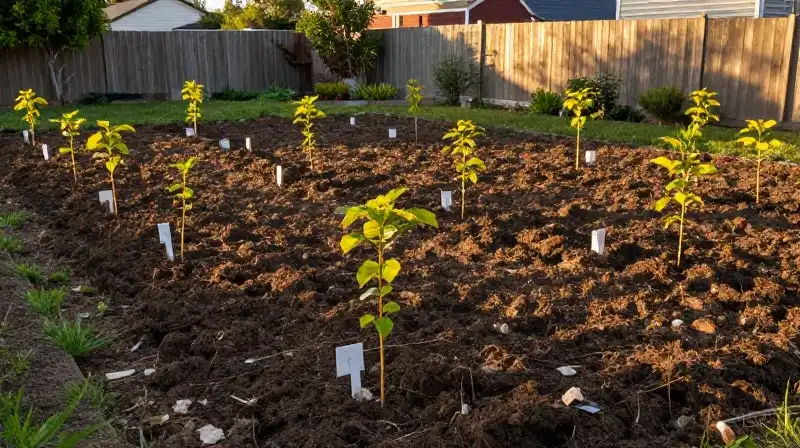 Before digging, you must understand the critical environmental factors your chosen tree requires. Privacy trees are not simply decorative; they are functional barriers whose effectiveness depends on robust, healthy growth.
Sunlight and Soil Preparation
Optimal privacy trees generally demand full sun, which is defined as receiving six to eight hours of direct sunlight daily. Adequate sunlight fuels the dense canopy necessary for effective screening. Soil health is equally vital. Privacy trees thrive in well-drained soil. This is a crucial point; poor drainage can lead to root rot, even in resilient species. The planting window should be early spring or fall, ensuring the ground is not frozen, which allows roots to establish easily.
Determining Space and Safety Limits
One of the most common mistakes when planting trees is ignoring their mature dimensions. Tree placement must account for the tree’s full projected height and width. When positioning your privacy trees for a backyard, maintain a safe distance from structures, sidewalks, and utility lines (such as overhead power lines). This distance is not just a matter of safety but ensures the tree does not interfere with essential home functionality or infrastructure over its lifespan.
Selecting the Right Species for Your Needs
The choice of tree dictates the maintenance level, required spacing, and the type of screen (dense foliage vs. structural shape) you achieve.
Evaluating Tree Categories and Function
Privacy trees can be categorized by their growth habit and foliage:
- Evergreen Privacy Trees: These offer year-round coverage, making them ideal for persistent neighbor privacy.
- Fast Growing Privacy Trees: These options allow you to achieve screening quickly, though they may demand more intense initial watering.
- Small and Compact Trees: These are suitable for smaller residential plots or areas where height is constrained (privacy trees under 10 feet tall).
Decision Criteria for Privacy Trees
To decide which type of privacy tree for your backyard is appropriate, consider the following factors:
| Criteria | Consideration | Practical Implication |
|---|---|---|
| Maintenance | Do you want low maintenance? | Choose native or slow-growing, established varieties. |
| Space Available | Is your backyard expansive or small? | Select compact varieties for small spaces; larger, tall trees for wide plots. |
| Desired Density | Do you need a thick visual screen? | Consider layering trees or planting multiple alternating lines to create a denser visual barrier. |
The Critical Rule: Proper Spacing for Privacy
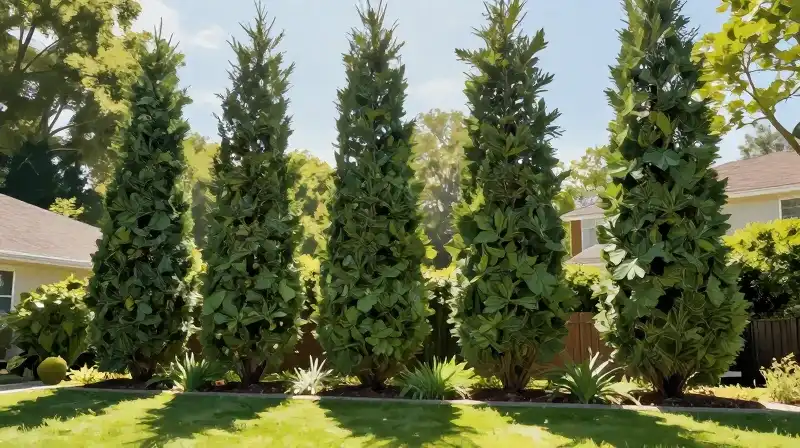 While general guidelines exist, the spacing requirements are highly dependent on the species, particularly distinguishing between general foliage types and needle-bearing conifers.
General Foliage Spacing (Evergreens and Deciduous Screening)
For many common evergreen privacy trees and dense foliage varieties, a spacing of six to eight feet between each specimen is generally recommended. This allows each tree to achieve sufficient width and density to form a cohesive screen while still allowing for adequate air circulation, which reduces pest and disease risk.
Specialized Spacing for Conifers
Pines and spruces require a significantly greater spacing than typical shrubs or broadleaf evergreens. They typically require ten to twelve feet of clearance between individuals. This larger footprint is necessary to accommodate their wider, often more aggressive, mature canopy and root structure, preventing them from competing too aggressively or stressing the soil too quickly.
Installation Steps: Planting and Initial Care
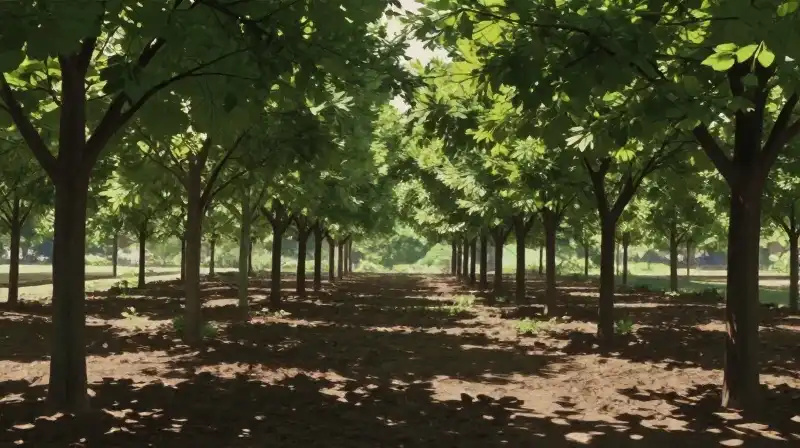 Proper installation is paramount to ensuring the tree develops the vigor needed to create an effective screen.
Digging the Planting Hole
The hole should be large enough to accommodate the entire root ball of the purchased tree, plus extra surrounding room to facilitate future growth. Planting too tightly restricts root expansion and hinders the tree’s ability to thrive. ### Planting and Immediate Aftercare 1. **Planting:** Position the tree so the root flare (where the trunk meets the roots) sits slightly above the surrounding soil line. 2. **Watering:** Thoroughly water the newly planted privacy trees immediately to settle the soil and initiate hydration. 3. **Mulching:** Apply a layer of organic mulch around the base of the tree. This conserves crucial moisture, moderates soil temperature, and helps suppress weeds, reducing future maintenance needs.
Maintenance and Long-Term Health
 Once established, the maintenance focus shifts to ensuring the tree maintains its density and structure.
Pruning and Shaping
While many privacy trees are low maintenance, strategic pruning can be employed by homeowners who wish to shape the canopy or maintain a specific visual line. Pruning should always be done carefully, focusing on encouraging dense new growth rather than simply removing foliage.
Water Management and Environmental Limits
New privacy trees need careful watering, especially during the first couple of growing seasons. However, once established, most species can withstand typical rainfall. Always monitor the soil to ensure proper drainage is maintained, particularly before heavy rains, preventing water from pooling around the root base.
Final Considerations for a Robust Privacy Screen
Successful backyard privacy is a result of good planning, not just planting. When finalizing your project, prioritize these practical takeaways:
- Prioritize Spacing Over Density: While the goal is a dense screen, planting too close together leads to competition, poor air circulation, and stunted growth, resulting in a thin, patchy barrier. Adhere to the specific spacing rules (6-8 ft vs. 10-12 ft).
- The Full Sun Mandate: Never plant a privacy tree in a shady location if the variety requires full sun; the tree will struggle and fail to achieve the desired dense screening.
- Observe Mature Size: Always reference the mature height and width of the specific cultivar you select to prevent future damage to home or property.
How to Install and Maintain Backyard Privacy Trees
Conduct Site Assessment
Ensure the planting area receives full sun (six to eight hours daily) and possesses well-drained soil. Determine the appropriate planting window (early spring or fall).
Select the Right Species and Spacing
Evaluate tree categories (Evergreen, Fast Growing, Small/Compact) based on space and density needs. Maintain required spacing (e.g., 6-8 feet for general foliage, 10-12 feet for conifers) based on the tree's mature size to prevent crowding.
Prepare the Planting Hole
Dig a planting hole large enough to accommodate the entire root ball of the tree, providing extra surrounding room to facilitate future root expansion and growth.
Position and Plant the Tree
Position the tree so that the root flare (where the trunk meets the roots) sits slightly above the surrounding soil line to allow for proper establishment.
Perform Initial Watering
Thoroughly water the newly planted privacy trees immediately to settle the soil and initiate hydration in the young roots.
Apply Organic Mulch
Apply a layer of organic mulch around the base of the tree to conserve crucial moisture, moderate soil temperature, and suppress weeds.
Monitor and Maintain
During initial growth, monitor the soil for proper drainage. Strategically prune the tree to encourage dense new growth, avoiding simple removal of foliage, and ensure continuous care until the screen is fully established.
Related Articles